Évoluer Aesthetics & Plastic surgery

FaceTite in Hyderabad

Radiofrequency skin tightening for the lower face, jowls, double chin, and neck, without surgery, without general anaesthesia, and without the recovery a facelift requires.

Evoluer logo

As you age or add more weight to the body, the jawline starts tosoften. A double chin that has not responded to weight loss. Loose skin along the neck that photographs differently from how it looks in the mirror. These are not early, surface concerns that fillers or skincare can reverse. They are structural, driven by tissue that has loosened beneath the skin. FaceTite addresses them directly, using controlled radiofrequency energy to tighten the underlying tissue and the overlying skin simultaneously, without cutting, without a surgical theatre, and with a recovery measured in days rather than weeks.

FaceTite is a minimally invasive radiofrequency-assisted lipolysis (RFAL) device made by InMode, approved by the USFDA. It uses bipolar radiofrequency energy delivered simultaneously through a small internal electrode and an external skin plate to reduce fat and tighten the overlying skin in a single session. It is used for the lower face, jowls, double chin, nasolabial folds, and neck. It is performed under local anaesthesia, requires no surgical incisions, and produces results that continue improving over three to six months as collagen remodels.

What FaceTite actually does

Most skin tightening treatments work from the outside in. They heat the surface or sub-surface skin and rely on the body's collagen response over time. FaceTite works differently. It delivers radiofrequency energy from inside the tissue outward, using a thin internal electrode inserted through a small needle port, while an external plate simultaneously monitors and controls the skin's surface temperature. This bipolar approach means the energy is delivered precisely to the tissue layer that has actually loosened, not just the skin sitting above it.

The result is simultaneous fat reduction and skin contraction in a single pass. Where liposuction alone removes fat but can leave the skin loose above the treated area, FaceTite addresses both at once. Where surface-only radiofrequency devices like Forma work from the outside and produce more gradual, limited tightening, FaceTite reaches the deeper tissue responsible for the structural change.

It is not equivalent to a facelift, and it is not presented as one. A facelift repositions tissue surgically. FaceTite tightens and remodels it without surgery. For the right patient, at the right stage of concern, the result is meaningful and lasting. For a patient whose tissue has descended beyond what radiofrequency remodelling can address, surgery remains the honest recommendation.

What concerns FaceTite addresses

FaceTite is planned and applied by area. Most patients have one primary concern; some have two or three that are treated in the same session.

What FaceTite actually does

FaceTite tends to produce its best results in patients who are in their 30s to mid-50s, with early to moderate tissue laxity, reasonable skin elasticity, and a specific structural concern such as jowls, double chin, or neck looseness. Being at a stable weight is important: FaceTite is not a weight-loss treatment, and significant weight fluctuation after the procedure can affect results.

It is a particularly relevant option if you have been told you are not yet at the stage where a facelift is the right recommendation, or if you are considering a non-surgical alternative to a procedure you are not ready to commit to. It is also a strong option for patients who have already had surgical work and want to maintain or extend results without returning to an operating theatre.

FaceTite is usually not the right fit if tissue laxity is advanced enough that surgical repositioning is what your concern genuinely requires, or if there are contraindications such as a pacemaker, metal implants in the treatment area, or certain systemic health conditions. All of this is assessed honestly at consultation.

What to expect on the day

Before the procedure

A consultation establishes which areas are being treated, confirms your medical history and any contraindications, and sets a clear expectation of what FaceTite can achieve for your specific anatomy. Pre-procedure instructions are provided, including avoiding blood-thinning medications, alcohol, and for best skin results, smoking cessation well in advance.

During the procedure

The treatment area is numbed with local anaesthesia. Small needle ports, typically two to four millimetres, are placed in discreet locations along the treatment zone. The internal electrode is inserted and moved systematically through the tissue while the external plate monitors and controls the skin temperature in real time. The procedure typically takes 45 minutes to two hours depending on the number of areas treated.

After the procedure

A compression garment is applied to support the treated area and reduce swelling. You go home the same day. Mild swelling, bruising, and a feeling of firmness or tightness in the treated area are normal. Most patients return to light activity within two to three days and to most normal activities within one to two weeks. Compression garments are typically worn for the first few days continuously and at night only for one to two weeks, as advised.

How FaceTite works, and what the technology means

FaceTite uses InMode’s radiofrequency-assisted lipolysis (RFAL) platform, which is USFDA-approved specifically for minimally invasive tissue coagulation. The device delivers bipolar radiofrequency energy through two electrodes simultaneously: one inserted internally through a small needle port, one applied externally to the skin surface. The internal electrode heats the fat and underlying tissue to a therapeutic temperature; the external electrode monitors skin surface temperature in real time and automatically regulates energy delivery to prevent overheating

This dual-electrode, real-time temperature monitoring is what separates FaceTite from older single-pole radiofrequency devices and is central to both its safety profile and its clinical consistency.The collagen contraction that results from the radiofrequency heating produces an immediate tightening effect. Over the following three to six months, new collagen production continues, improving results further. Final outcomes are typically visible from three months and continue refining to around six months.

FaceTite vs other options: what to know before deciding

Understanding where FaceTite sits relative to other available options helps you go into a consultation with the right questions.

FaceTite cost in Hyderabad

FaceTite treatment cost varies depending on the number of areas treated and whether it is combined with AccuTite or Morpheus8 in the same session. As a general guide, FaceTite for a single area such as the double chin or lower face is typically priced differently from a full lower face and neck combination treatment.

What an Évoluer quote includes: surgeon’s fee, the procedure itself, local anaesthesia, your compression garment, and scheduled follow-up. An itemised estimate is shared in writing after your consultation. Flexible payment options are available.

Why patients choose Évoluer for FaceTite

USFDA-Approved FaceTite Technology

We use the USFDA-approved InMode FaceTite platform, the same radiofrequency-assisted contouring technology used in leading aesthetic clinics around the world.

Surgeon-Led Planning

Every FaceTite consultation, treatment plan, and procedure is assessed and performed by a board-certified plastic surgeon, not delegated to a technician or non-surgical provider.

Honest Treatment Recommendations

We do not upsell patients to surgery when FaceTite is genuinely the right option, and we do not downplay surgery when a surgical procedure would provide a better outcome.

Dedicated Procedure Suite

Treatments are performed in a dedicated procedure environment following international standards for sterility, patient monitoring, safety, and clinical care.

Transparent Pricing

Itemised pricing is shared after consultation, with clear explanations of costs and no quote-on-request tactics, hidden fees, or unexpected charges.

Structured Follow-Up

Scheduled follow-up appointments are arranged at the intervals that matter most, allowing your surgeon to monitor healing, tissue response, and the progression of your results.

What does face-lift recovery look like?

DAYS 1 TO 3

Swelling and mild bruising are expected during the first few days. A compression garment is worn continuously to support healing. Most patients rest at home but generally do not feel unwell.

DAYS 4 TO 7

Swelling begins to reduce and comfort improves. Many patients feel ready to return to work and light social activities by day four or five.

WEEKS 2 TO 4

Bruising typically resolves during this stage, while residual swelling continues to subside. The lower face and jawline begin to appear noticeably firmer and more refined to others.

MONTHS 1 TO 3

Collagen remodelling continues beneath the skin, gradually improving firmness and contour. Results become increasingly defined as the tissues settle.

MONTHS 3 TO 6

The final result becomes visible as collagen production matures and residual swelling fully resolves. Most patients appreciate their clearest improvement between four and six months after treatment.

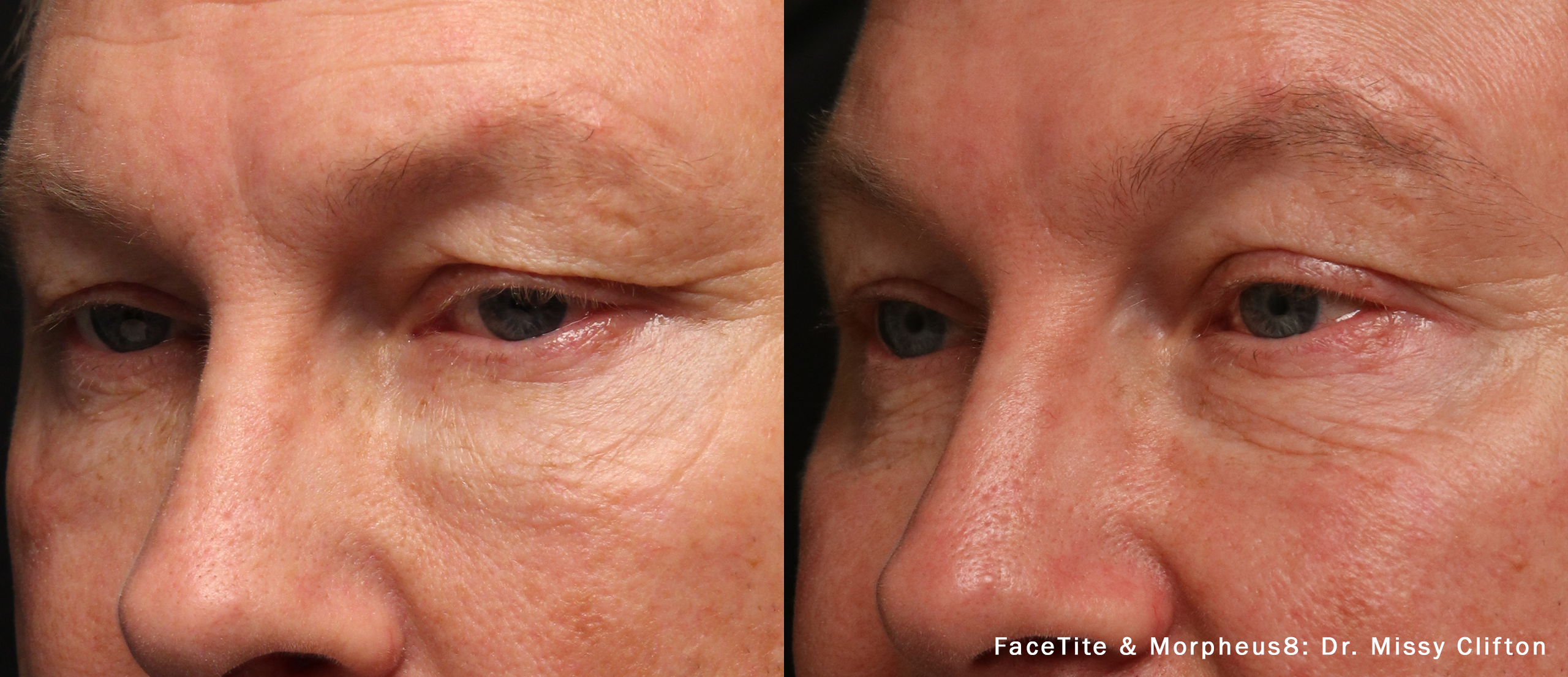
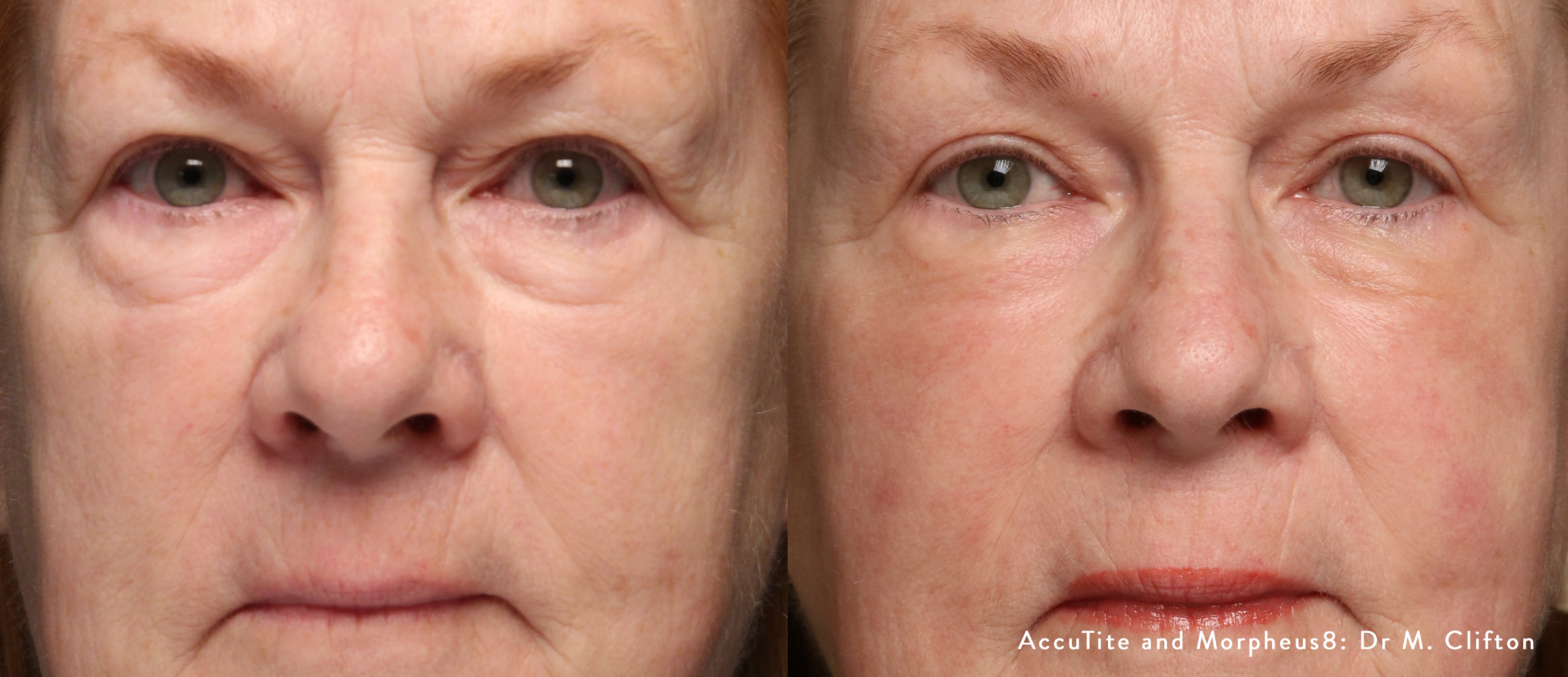
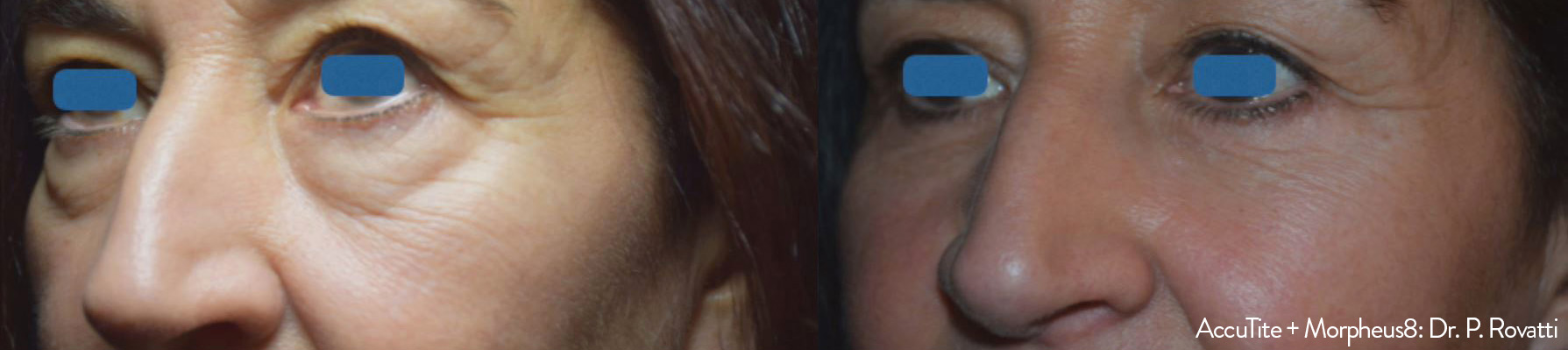
Results from FaceTite are long lasting. The treated tissue does not revert, though the natural ageing process continues. Many patients combine periodic Morpheus8 sessions to maintain skin quality between procedures.

Face lift at Évoluer is led by Dr. Varnika JP

Évoluer’s minimally invasive and surgical treatments are led by board-certified plastic and aesthetic surgeons. Every FaceTite procedure is planned and performed by the same surgeon who consults with you.

  • Dr. Varnika JP Consultant Plastic & Aesthetic Surgeon
  • MBBS · MS, General Surgery 
  • MCh, Plastic Surgery (Gandhi Medical College, University Gold Medalist) 
  • Lifetime Member, Indian Association of Aesthetic Plastic Surgeons

Over 10years in surgical practice, with particular focus on body contouring surgery. 

View full profile

FAQ

FaceTite uses radiofrequency energy delivered through a small internal electrode to tighten tissue and reduce fat without surgical incisions. A facelift repositions tissue surgically. FaceTite is appropriate for early to moderate laxity; a facelift is appropriate for more advanced concerns. They are different tools for different stages of the same problem, not competing options.

FaceTite uses the same RFAL technology platform as BodyTite, which has a substantial evidence base and USFDA approval. Its mechanism of action, heating tissue from the inside to trigger collagen contraction and remodelling, is well understood. Results depend on individual anatomy, the degree of laxity, and correct technique. For the right patient, the improvement is clinically meaningful and long lasting. For a patient whose concern requires surgical correction, FaceTitewill not substitute.

The area is numbed with local anaesthesia before the procedure begins. During the procedure, most patients feel pressure or warmth rather than pain. Post-procedure discomfort is typically mild, described as tightness or soreness, and is well managed.

The procedure typically takes 45 minutes to two hours, depending on the number of areas treated. It is performed as a single session.

Most patients return to light activity within two to three days and to most normal activities within one to two weeks. Visible bruising typically fades within seven to ten days. A compression garment is worn for the first one to two weeks.

Results are long lasting. The tissue changes produced by FaceTite do not reverse. The natural ageing process continues, and some patients combine FaceTite with periodic Morpheus8 to maintain skin quality over time.

Some tightening is visible immediately, though swelling masks the full result in the first few weeks. The clearest improvement becomes visible at three months as collagen remodelling progresses, with final results typically visible by six months.

Yes. Double chin and submental fat reduction is one of FaceTite’s most common applications. It addresses both the fat under the chin and the skin laxity simultaneously, producing a more defined jaw and neck profile.

Yes. Jowls and lower face laxity are primary indications for FaceTite. It tightens the tissue along the jawline and cheeks where early jowling has occurred, without the incisions or recovery of a facelift.

Yes, and combination planning is common. FaceTite is often combined with AccuTite for precision work in smaller areas, and with Morpheus8 either in the same session or as a follow-up treatment for skin quality. Your surgeon will recommend the right combination for your concern at consultation.

Both use the same InMode RFAL technology. FaceTite uses a standard applicator suited to larger facial areas such as the lower face and neck. AccuTite uses a smaller, more precise applicator for areas FaceTite cannot reach cleanly, such as around the eyes, brow, and along the nasolabial folds. They are often used together.

FaceTite cost depends on the number of areas treated and whether it is combined with other procedures in the same session. An itemised estimate is provided after consultation. Contact us to arrange a consultation and get a written quote.

Yes. FaceTite’s real-time temperature monitoring system regulates energy delivery based on actual skin temperature rather than a fixed setting, which reduces the risk of post-inflammatory hyperpigmentation that can be a concern with some older energy-based devices for darker skin types. This is one of the reasons InMode’s platform is well regarded for Indian and South Asian patients.

FaceTite uses small needle ports, typically two to four millimetres, placed in discreet locations. These are not incisions and do not leave visible scars in most patients.

They work through different mechanisms. HIFU (High Intensity Focused Ultrasound) delivers energy from the outside in, at specific focal depths. FaceTite delivers radiofrequency from the inside out through an internal electrode, which allows it to address fat alongside tightening. For significant double chin or jowling where fat reduction is part of the goal, FaceTite is generally more directly effective. For superficial skin tightening without any fat component, HIFU may suit some patients. Both are assessed at consultation.

FaceTite produces permanent changes to the treated tissue. The fat cells reduced do not regenerate, and the collagen produced from the treatment is new structural collagen. The ageing process continues normally after treatment, so the face continues to age, but from the improved baseline the procedure establishes.

Get to know about our exciting new offers

Be the first to know about new arrivals and promotions