Hair transplant in Hyderabad, planned and performed by a surgeon.
FUE and FUT hair restoration at Évoluer. A clinical assessment of your scalp comes first, an honest graft count second, and a transparent cost after that. Not the other way around.

A hair transplant moves your own permanent hair follicles from the back and sides of the scalp, where hair resists balding, to thinning or bald areas. At Évoluer Aesthetics in Hyderabad it is performed under qualified surgical oversight, priced by the number of grafts you actually need, and confirmed only after a scalp assessment.
Hair loss is common. Choosing where to treat it is the hard part.
If you are reading this, you have probably already tried a few things. A serum, a dermatologist visit, maybe a course of tablets. You have likely also noticed that Hyderabad has more hair transplant clinics than you can count, many of them promising the lowest price per graft in the city.
Hair transplant surgery can be an effective solution for those experiencing hair loss or thinning. It is important to consult a qualified professional to determine if it is the right option, and realistic expectations are important. While hair transplant surgery can produce natural looking results, it may not completely restore a full head of hair.
If you are considering hair transplant surgery, it is important to research potential clinics and surgeons and ask any questions about the procedure. It is also important to follow post-operative instructions and to attend follow-up appointments to ensure the best possible results.
A hair transplant is a one time redistribution of a limited resource: your donor hair. It cannot be undone, and a poorly planned procedure can waste follicles you will never get back. That is why the assessment matters more, and why an expert should be performing this procedure.
What is a hair transplant?
A hair transplant is a surgical procedure that relocates hair follicles from a donor area, usually the back and sides of the scalp, to areas where hair has thinned or stopped growing.
The follicles taken from the donor area are genetically resistant to the hormone that drives common pattern baldness. Once moved, they keep that resistance, which is why transplanted hair is considered permanent and continues to grow naturally in its new location.
A hair transplant does not create new hair. It redistributes the hair you already have. This is the single most important thing to understand before surgery, because it sets the realistic limit on what one procedure can achieve. A skilled plan spends your donor supply where it has the most visual impact, typically the hairline and the front third of the scalp that frames your face.
Is one graft the same as one hair?
No. A graft is a follicular unit, a natural grouping that contains one to four individual hairs. So a 2,000 graft procedure usually delivers somewhere between 4,000 and 5,000 actual hairs, depending on your follicle grouping. This is why graft counts and hair counts are not interchangeable, and why a quote should always specify grafts.
FUE and DHI: which technique is right for you?
Évoluer offers FUE (follicular unit extraction) and DHI, a refined variation of FUE. Neither is universally better than the other; the right one depends on your donor area, the number of grafts needed, and how you wear your hair.
The procedure is performed using local anaesthesia to numb the scalp. It typically takes several hours to complete and may be done in a single session or multiple sessions, depending on the extent of hair loss.
Évoluer will recommend the technique that fits your case at consultation and explain the reasoning, rather than defaulting to whichever is easiest to schedule.
| Technique | How it Works | Best Suited To | Trade Off |
|---|---|---|---|
| FUE | Individual follicular units extracted directly from the scalp with a micro punch, then implanted. | Most patients. No linear scar, suits short hairstyles, faster healing. | Donor area is trimmed; longer session time for large cases. |
| DHI | A variation of FUE where extraction and implantation happen with an implanter pen, reducing graft handling. | Smaller, targeted areas and dense hairline design. | Higher cost; not always necessary for first time patients. |
Évoluer will recommend the technique that fits your case at consultation and explain the reasoning, rather than defaulting to whichever is easiest to schedule.In practice, FUE is the most requested technique in Hyderabad because it avoids a linear scar and suits how most men wear their hair. DHI is reserved for cases needing precise hairline design or very targeted density work.
Your surgeon recommends the technique that suits your goals, your scalp, and your overall health, after understanding what you actually need. The right choice is the one that fits you, not a default.
Graft survival depends as much on what happens after the procedure as during it. Your surgeon will outline a structured recovery protocol, including options to support healing and graft retention, in the weeks following your transplant.
Who is a good candidate for a hair transplant?
The best candidates have stable or predictable hair loss, a healthy donor area with enough density to spare, and realistic expectations about what redistributing that hair can achieve.
Candidacy is assessed on your scalp, not on a phone enquiry. The two things that decide it are the quality of your donor area and the pattern and stability of your loss. A strong donor area can supply a natural looking result; a weak or over harvested one cannot, no matter how skilled the surgery.
You are likely a candidate if
- You have pattern hair loss (male or female) that has stabilised or follows a predictable pattern,
- Your donor area at the back and sides still has good density,
- You want to restore a hairline or add density to a defined area rather than reverse total baldness,
- You understand the result is permanent but native hair around it may continue its own pattern over time.
A transplant may not be right, yet, if
- Your loss is still actively progressing and unstable, in which case medical treatment may come first,
- Your donor area is thin or already over harvested from a previous procedure,
- You have certain scalp or autoimmune conditions affecting hair, which need assessment first,
- The expectation is a full teenage hairline on an advanced pattern, which the donor supply cannot honestly support.
How baldness stage affects your plan
Hair loss is commonly graded on the Norwood scale for men, from early recession to advanced baldness. The stage drives how many grafts you are likely to need, which in turn drives cost. The figures below are typical ranges, not a quote; your actual number comes from a scalp assessment.
| Norwood Stage | What it Looks Like | Typical Grafts Needed | ||||||||||||||||||||||||
|---|---|---|---|---|---|---|---|---|---|---|---|---|---|---|---|---|---|---|---|---|---|---|---|---|---|---|
| Stage 2 to 3 | Early recession at the temples and hairline. | 1,000 to 2,000 grafts. | ||||||||||||||||||||||||
| Stage 3 to 4 | Hairline recession with early crown thinning. | 2,000 to 3,000 grafts. | ||||||||||||||||||||||||
| Stage 5 to 6 | Larger bald areas, hairline and crown merging. | 3,000 to 5,000 grafts. |
| Therapy | What it Does in This Context |
|---|---|
| PRP (Platelet-Rich Plasma) | Concentrated platelets from your own blood, used to support scalp healing and the surrounding follicular environment after transplantation. |
| GFC (Growth Factor Concentrate) | A refined, single-spin alternative to PRP, used for the same supportive purpose with a different preparation method. |
| Exosome Therapy | Cell-signalling therapy used to support the scalp environment during recovery. |
These are not required for every patient. Your surgeon will advise at consultation and during follow-up whether any of these would support your specific case, based on graft count, scalp condition and how your recovery is progressing.
How much does a hair transplant cost in Hyderabad?
Hair transplant cost in Hyderabad is calculated per graft, and total cost depends on how many grafts you need, the technique used, and what aftercare is included. As a guide, procedures commonly range from around ₹60,000 to ₹3,00,000.
Because cost is graft based, the only honest figure for you personally is one given after a scalp assessment. The indicative bands below reflect the current Hyderabad market and help you plan. They are not a quote, and at Évoluer your specific cost is shared transparently at consultation, itemised, with nothing added later.
| What You Need | Typical Grafts | Indicative Range (FUE) | Norwood |
|---|---|---|---|
| Hairline / Temples | 1,000 to 2,000 | ₹60,000 to ₹1,20,000 | 2 to 3 |
| Hairline + Early Crown | 2,000 to 3,000 | ₹1,20,000 to ₹2,00,000 | 3 to 4 |
| Larger Area / Density | 3,000 to 5,000 | ₹2,00,000 to ₹3,00,000 | 5 to 6 |
What affects the cost
- Number of grafts. The single biggest driver, set by your baldness stage and goals.
- Technique. FUT is usually the most economical per graft, FUE sits in the middle, DHI is the most expensive.
- Who performs it. A procedure performed by a surgeon differs from a technician led session, and that difference shows in graft survival, not only in price.
- What is included. PRP, medications and follow ups may be bundled or billed separately. A low headline quote that excludes aftercare can cost more in total.
What Évoluer includes
- The surgical procedure and clinical team time,
- Local anaesthesia and a sterile surgical setting,
- The scalp assessment and graft planning,
- Structured post procedure care and scheduled follow ups,
- Guidance on medical treatment to protect your native hair where relevant.
Beard transplant in Hyderabad
A beard transplant uses the same FUE principle as a scalp transplant: permanent follicles from the donor area of the scalp are relocated to the beard and moustache region to fill patchy growth, scars, or areas that never grew in.
It suits men who cannot grow an even beard, who have gaps from old scars or injury, or who want a denser, more defined shape. Because the donor hair is your own and permanent, the result grows like natural beard hair and can be trimmed and shaved normally once healed.
How it differs from a scalp transplant
- Angles matter more. Beard hair grows flatter and in specific directions, so placement is detailed work.
- Graft counts are lower. A typical beard restoration uses a few hundred to around 2,500 grafts depending on the area.
- Healing is quick. Tiny crusts settle within about a week; transplanted hairs shed then regrow like a scalp transplant.
Beard transplant cost in Hyderabad
Like a scalp transplant, a beard transplant is priced per graft, so cost depends on how many grafts the area needs. Because counts are lower, total cost is usually below a full scalp procedure. Your exact cost is confirmed after assessment.
Why choose Évoluer for Hair Transplant in Hyderabad
Hyderabad has a hundred clinics offering hair transplants, many competing on the lowest price per graft. Évoluer is not built to win that race, and the reasons are the reasons to choose it.
A clinical procedure, treated as one.
Performed under surgical oversight, not run as a volume line. We do not treat a transplant as a technician task to be batched through in a marathon day. The plan and the procedure stay in qualified hands.
Conservative use of donor hair.
Your donor area is a finite resource. We plan for your future hair loss, not only today's, so we do not over harvest a donor area for a higher graft count that looks good on an invoice and poor in five years.
Assessment before quote.
Graft count and cost follow a scalp assessment, and the quote is itemised with nothing added later. If a cheaper technique would serve you as well, we will say so.
International standards and real aftercare.
Sterile surgical setting, USFDA approved equipment, and structured aftercare with scheduled follow ups, because growth happens over months and you should not be left alone for them.
Two Hyderabad locations.
Surgical and aesthetic care across our Banjara Hills and Jubilee Hills locations in Hyderabad, with medical treatment to protect native hair where it helps.
What does hair transplant recovery look like?
Recovery happens in stages. The scalp heals within about two weeks, transplanted hair sheds in the first one to two months, new growth begins around three to four months, and the full result settles by twelve months.
FIRST WEEK
Tiny scabs at the implant sites, mild swelling, and redness. Most patients take a few days off and avoid strenuous activity. The donor area is dressed if FUT was used.
WEEKS TWO TO THREE
Scabs clear, redness fades, and most patients return to work and normal social life. Direct sun, swimming, and heavy exercise stay restricted a little longer.
MONTH ONE TO TWO
Transplanted hairs shed. This is expected and not a failure; the follicles remain and are entering a resting phase. The scalp looks much as it did before surgery during this window.
MONTH THREE TO SIX
New growth begins and becomes visible. Density builds gradually month on month. Texture may be fine at first and thickens over time.
MONTH NINE TO TWELVE
The result matures into its final density and the hairline settles. This is the point at which the outcome is fairly judged, not before.
After the transplant, it is common for the transplanted hair to fall out, but new hair should begin to grow within a few months. The final results of a hair transplant may not be evident for several months to a year after the procedure.
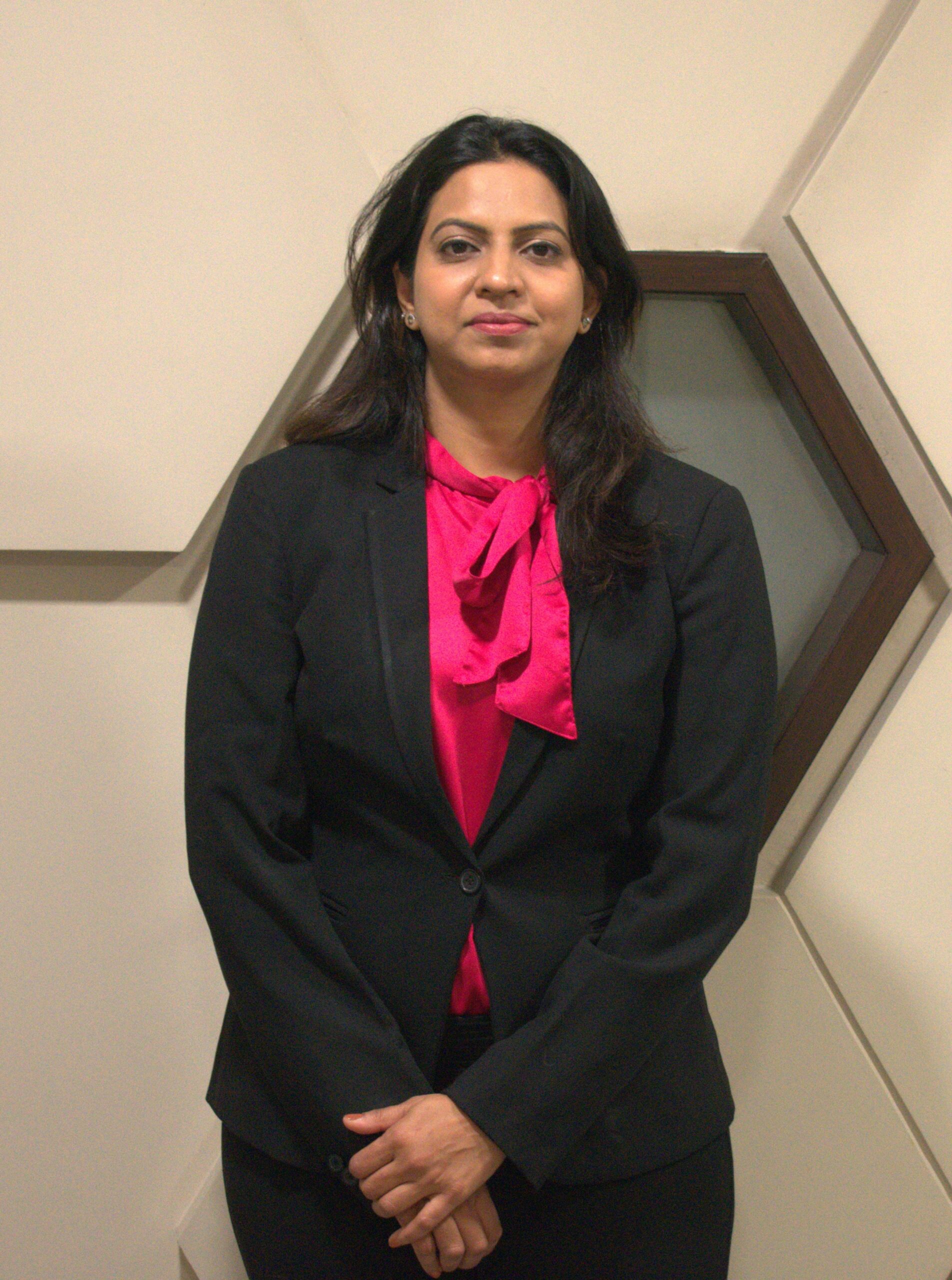
Hair transplant at Évoluer is led by Dr. Varnika JP
Dr. Varnika consults, plans, and performs the procedure herself. Body contouring and liposuction are among her core areas of practice. There is no handoff between the consultation and the operating room.
Dr. Varnika JP
M.S,MCH
FAS (Sweden, Belgium)
MCh (Plastic surgery) – Gold medallist
FAS -Akkademikliniken,Stockholm, Sweden
Wellness kliniek, Belgium
Training in Rhinoplasty (Istanbul, Turkey)
Breast surgery (Washington DC, USA)
FAQ
Hair transplant in Hyderabad is priced per graft, and total cost typically ranges from around ₹60,000 to ₹3,00,000 depending on how many grafts you need, the technique, and what aftercare is included. Graft count is set by your baldness stage, so an accurate figure follows a scalp assessment. At Évoluer the cost is itemised and shared transparently at consultation.
A 3,000 graft FUE procedure in Hyderabad commonly falls between roughly ₹1,20,000 and ₹2,00,000, depending on the clinic and what is included. Whether 3,000 grafts is the right number for you depends on your donor density and the area being covered, which is confirmed at assessment.
A 5,000 graft procedure sits at the upper end of the range, commonly ₹2,00,000 and above, and is often best split into phased sessions rather than one marathon sitting to protect graft survival. The exact figure depends on technique and donor supply.
For many patients with hairline recession and early crown thinning, 3,000 grafts is enough to restore a natural looking frame to the face. For advanced baldness it may form one stage of a larger plan. Enough is defined by your pattern and goals, not by a fixed number.
No. A graft is a follicular unit containing one to four hairs, so a procedure delivers more individual hairs than its graft count. A 2,000 graft procedure, for example, usually yields between 4,000 and 5,000 hairs.
No procedure is guaranteed at 100%, and you should be wary of any clinic that promises it. In well run procedures with a healthy donor area and good aftercare, a high proportion of grafts survive and grow. Graft survival depends on careful handling and short out of body time, which is a function of technique and care.
A hair transplant is a low risk procedure when performed by qualified hands in a sterile setting under local anaesthesia. The common effects are temporary swelling, scabbing and numbness. The main avoidable risk is over harvesting a donor area, which is why who performs it matters as much as where.
The transplanted follicles are permanent because they are taken from zones resistant to pattern balding. Your untransplanted native hair can still follow its own pattern over time, so a good plan accounts for future loss, not only current loss.
Neither is universally better. FUE leaves no linear scar and suits short hairstyles and most patients; FUT can place a high graft count efficiently in one session and suits advanced baldness with longer hair. The right choice depends on your donor area and goals, decided at consultation.
The scalp heals within about two weeks and most patients return to work then. Transplanted hair sheds in the first one to two months, regrowth begins around three to four months, and the full result settles by twelve months.
Hair loss is treated rather than cured. A Norwood stage 3 pattern usually responds well to a transplant because donor supply is still strong and the area to cover is modest, often combined with medical treatment to stabilise ongoing loss.
Yes. A beard transplant relocates permanent scalp follicles to the beard and moustache to fill patchy growth, scars, or gaps. Graft counts are lower than a scalp transplant, so cost is usually lower, and the result grows and can be groomed like natural beard hair.
Yes. Women with pattern thinning or traction alopecia can be candidates, and because they often need fewer grafts, total cost can be lower. Candidacy is assessed on donor density and the stability of the loss, as it is for men.
The right clinic is one where a qualified surgeon assesses your scalp and performs the procedure, where the donor area is used conservatively, where pricing is itemised after assessment, and where aftercare is structured over the months that growth actually takes. Évoluer is built on those principles across its Banjara Hills and Jubilee Hills locations.
Call or message +91 90592 19194 on WhatsApp, or use the consultation form on this page. The first step is a scalp assessment, after which you receive an honest graft count and an itemised cost, with time to decide.
Take the next step, privately and at your pace.
The first step is a scalp assessment. You leave with an honest graft count, an itemised cost, and the time to think about it.